Unit Sequencing
Executes start permissives, auxiliary sequencing, purge, ignition, acceleration, synchronization, load control and normal shutdown logic.

MARK CONTROL / TURBINE CONTROL
The Mark control platform performs gas turbine sequencing, speed and load control, fuel control, protection, alarms and operating diagnostics. Mark VIe connects field equipment with operator and maintenance environments through modular controllers, distributed I/O, deterministic I/O networks and integrated engineering tools.
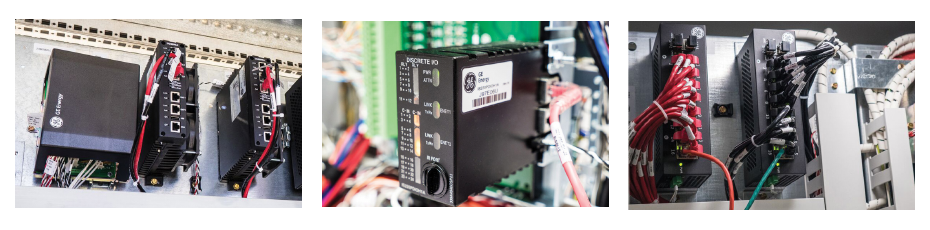
From turning gear, purge, ignition and acceleration to synchronization, loaded operation and shutdown, the control logic coordinates field I/O, fuel and actuators, protection circuits, generator systems and operator interfaces. Modernization requires a coordinated review of application logic, field wiring, networks, HMI and the available outage window.
SYSTEM OVERVIEW
Executes start permissives, auxiliary sequencing, purge, ignition, acceleration, synchronization, load control and normal shutdown logic.
Processes speed, temperature, fuel, load and actuator feedback to perform real-time regulation for the unit application.
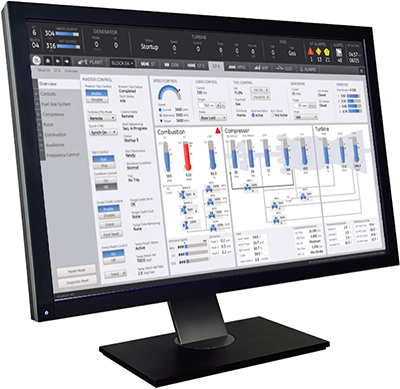
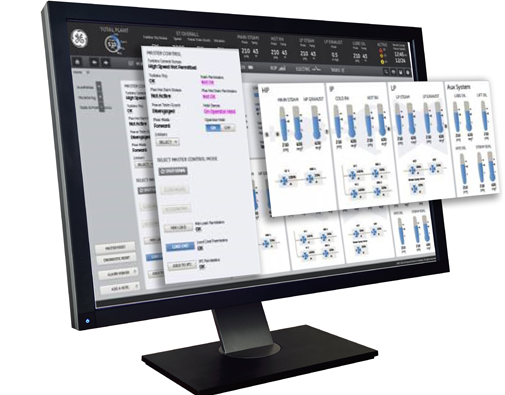
Integrates alarms, trips, sequence of events, trends and I/O diagnostics into a common operating and maintenance environment.
Modular hardware supports phased updates; migration paths for earlier Mark platforms depend on generation, wiring and the scope that can be retained.
SYSTEM IMAGES
SYSTEM CONTEXT
Sensors, speed probes, fuel valves, servos, discrete signals and auxiliary systems form the unit signal and actuation layer.
Field wiring enters through terminal boards and I/O Packs, whose local processors perform acquisition, diagnostics and time stamping.
A dedicated full-duplex point-to-point I/O network connects controllers with local or remote I/O and can be configured for application-specific redundancy.
Controllers execute real-time application logic in simplex, dual or triple-redundant configurations and synchronize variables across redundant controllers.
The control network connects operator, engineering and historian workstations together with other Mark VIe family systems.
TECHNICAL KNOWLEDGE
Mark VIe supports simplex, dual and triple-redundant controller configurations; I/O modules and I/O networks may also be arranged as simplex or redundant systems.
IONet is a 100 Mb full-duplex point-to-point network for local and distributed control I/O, while I/O Packs perform module-level diagnostics and voting.
Discrete I/O can provide 1 ms time stamping to help reconstruct the sequence of trips and abnormal events.
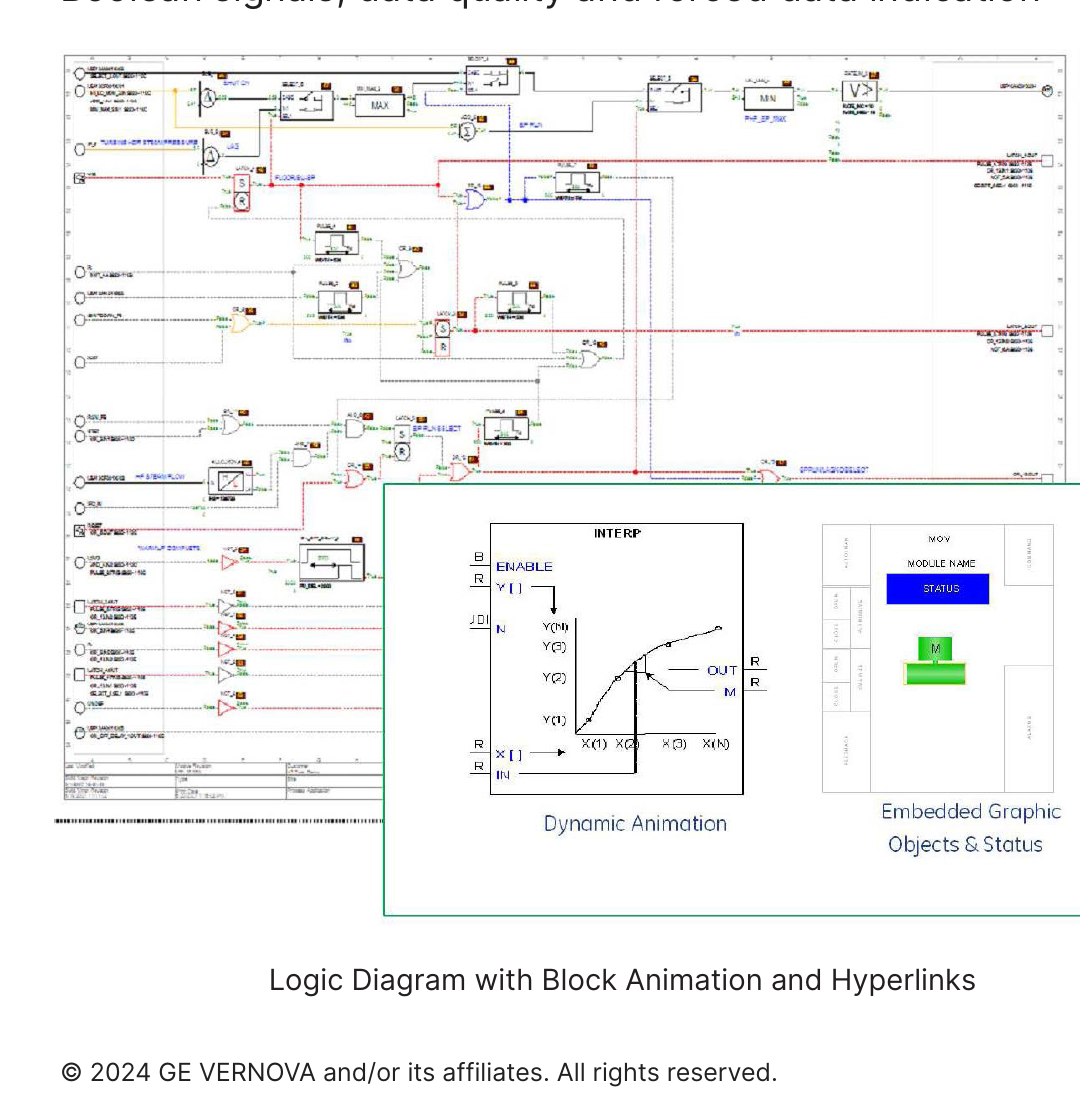
Application logic can be organized with function blocks, sequential function charts and ladder diagrams and executed at configured frame rates.
Remote I/O can be located near equipment to reduce long field cable runs, while gateways can integrate PROFINET, Modbus, PROFIBUS and Foundation Fieldbus.
Before an upgrade, review the running software archive, network topology, ControlST and HMI versions, cabinet hardware, field wiring and applicable technical advisories.
TECHNICAL REVIEW
Please prepare the unit model, installed system version, network and I/O configuration, alarm records, and planned outage window.
kongyang@kongyangpower.com