Controlled Starting Torque
Before ignition and turbine self-sustaining speed, controlled current drives the generator as a motor to provide accelerating torque to the shaft train.

STATIC STARTER / GAS TURBINE
During gas turbine startup, the LCI load-commutated inverter static starting system operates the generator as a synchronous motor. It accelerates the gas turbine rotor according to the starting sequence and leaves the starting chain after the unit reaches self-sustaining conditions.
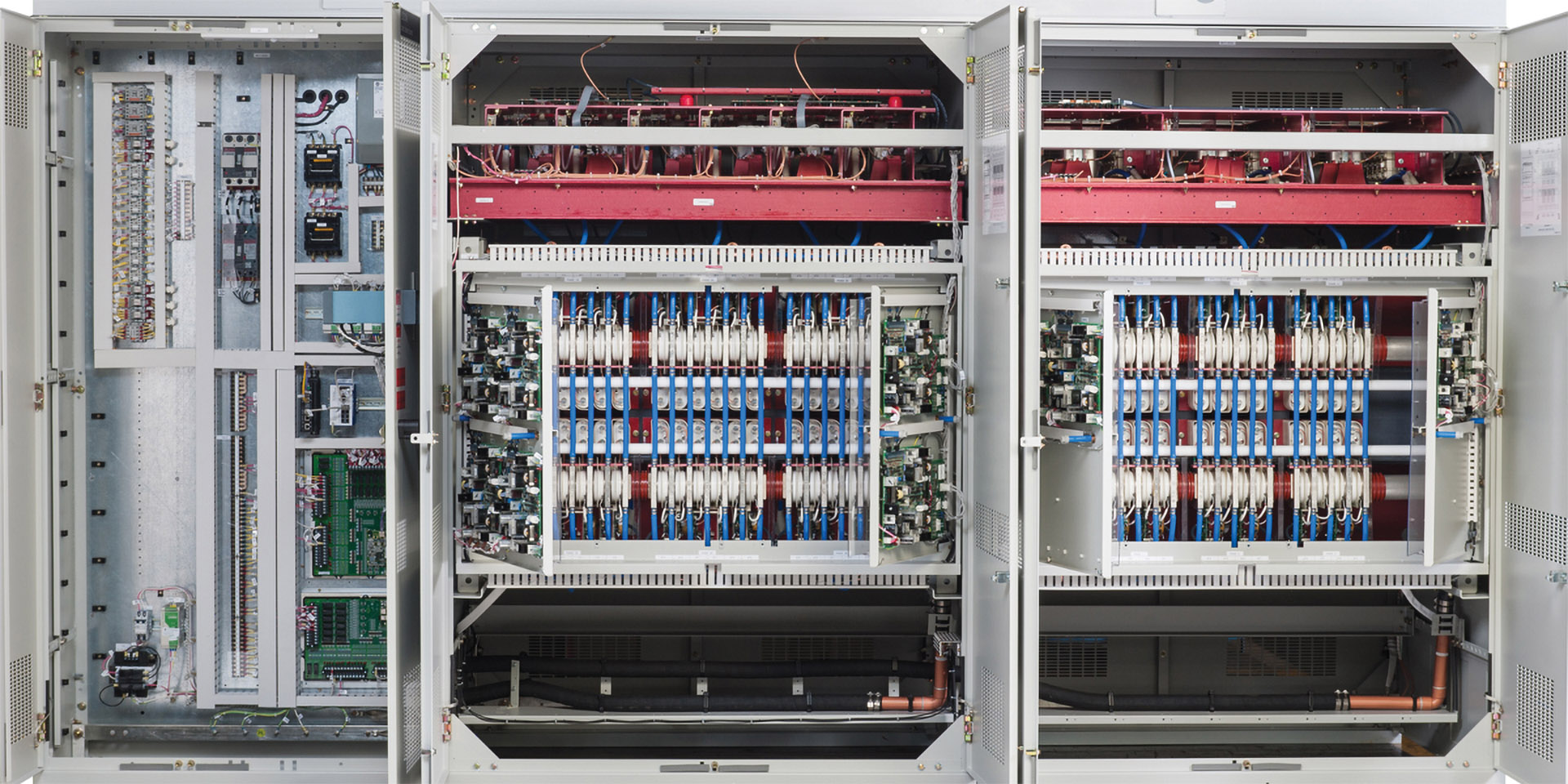
Static starting must coordinate in sequence with turbine control, excitation, the generator and starting isolation equipment. Start permissives, switch positions, excitation status, speed reference, cooling and power conversion status together form the complete starting chain.
SYSTEM OVERVIEW
Before ignition and turbine self-sustaining speed, controlled current drives the generator as a motor to provide accelerating torque to the shaft train.
Exchanges permissives, commands and status with turbine control through turning gear, purge, ignition, acceleration and disengagement stages.
Power conversion, isolation switches, excitation and cooling systems together satisfy the electrical and thermal requirements of static starting.
Retrofits of installed LCI and Ls systems require review of power rating, cooling, redundancy, power equipment, control interfaces and site arrangement.
SYSTEM CONTEXT
Input switchgear, transformers and isolation equipment establish the supply and safety boundary required for static starting.
Controlled rectifier and inverter stages produce adjustable starting current and frequency for shaft acceleration.
The excitation system establishes the generator rotor field required for synchronous motor operation.
The static starter drives the generator to turn the gas turbine shaft through turning, purge and acceleration stages according to the speed reference.
After ignition and self-sustaining conditions are achieved, the starter disengages in sequence and the unit transfers to the normal turbine control chain.
TECHNICAL KNOWLEDGE
The static starter uses the generator as a synchronous motor to turn the gas turbine shaft, avoiding a separate large mechanical starting drive.
Ls2100e is available in 8.5, 11, 14 and 22 MVA ratings, with selection based on unit starting requirements.
One static starter can be configured to start multiple gas turbines, or two starters can be cross-connected for redundant and multi-unit arrangements.
As part of the Mark VIe control technology family, Ls2100e can communicate point to point with turbine control and Ex2100e over the UDH.
ControlST is used for static starter configuration, while operator and engineering workstations can be shared with other Mark VIe family systems.
A retrofit may use full replacement or a digital front end, with engineering review of reusable power equipment, cooling, switchgear and interfaces.
TECHNICAL REVIEW
Please prepare the unit model, installed system version, network and I/O configuration, alarm records, and planned outage window.
kongyang@kongyangpower.com